
Amazon and Nordeste: River, Celebration, and Ocean
In partnership: LaChiave with Sara Bertola
12 nights · 13 days · From December 26, 2026 to January 7, 2027
Is this journey for me?
Highlights
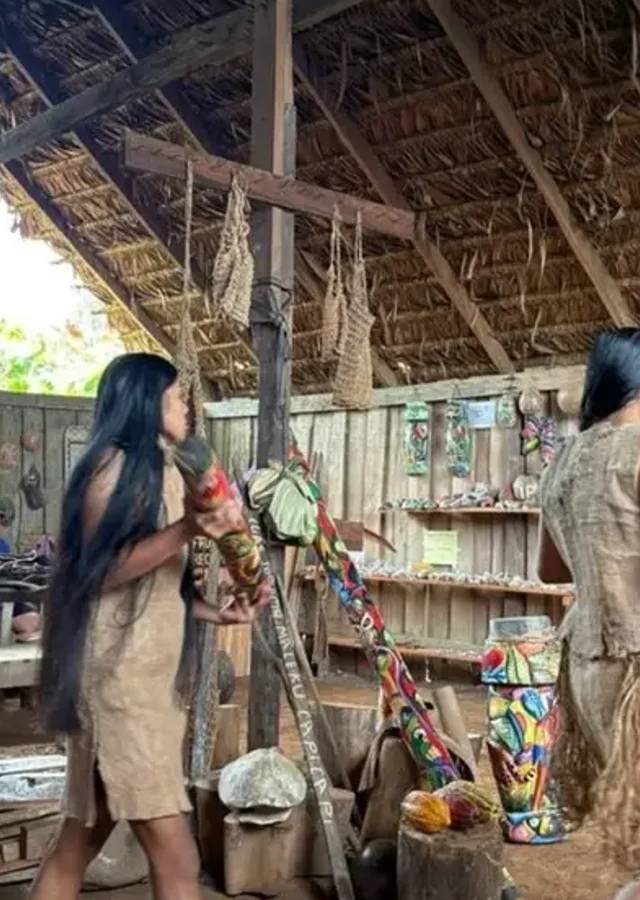
Manaus and Comunidade Saracá, Amazon
Manaus is the gateway to the world’s largest forest: a market filled with river fish and fruits you've never seen before, and an opera house built with rubber boom wealth right in the middle of the jungle. Then you travel up the Rio Negro to the Comunidade Saracá, inside a sustainable development reserve where families live from fishing, crafts, and community-led tourism. You sleep in the community, eat what they prepare, and ease into their rhythm—the rhythm of the water. An act of subtraction. Roles, control, and constant reachability fall away. And one question remains: who am I, when nobody knows what I do?
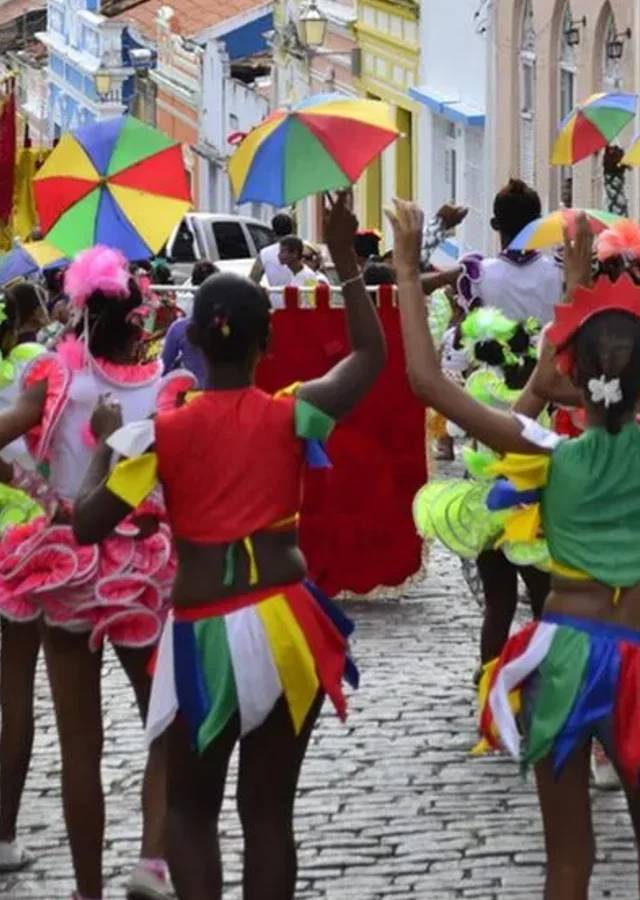
Olinda and Recife, history and New Year's Eve
Olinda is a UNESCO World Heritage site: cobbled hills, colorful colonial houses, baroque churches, and artists' studios overlooking the Atlantic. Right next door is Recife, with its historic center and the home of frevo and carnival. Here, the new year is welcomed in the streets, in a city that experiences carnival as a collective identity rather than a tourist season. A threshold to cross. A city celebrates a passage while you are going through one of your own. And so we can ask ourselves: what do I bring with me into the new year, and what can I leave behind?
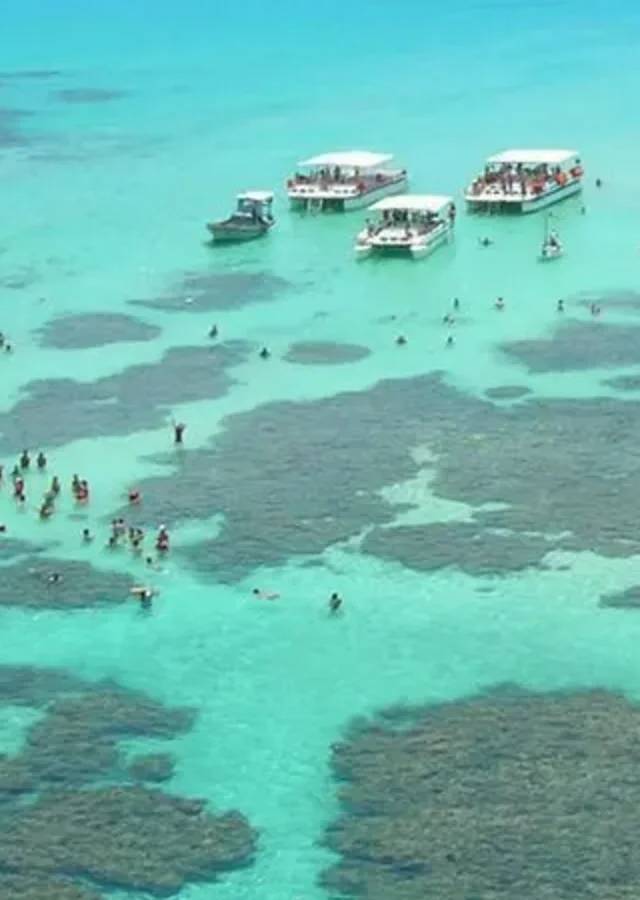
The coast: Maracaípe and Japaratinga, Porto de Galinhas and Maragogi
A stretch of coastline between Pernambuco and Alagoas, among the most beautiful in Brazil and still largely undeveloped. Two quiet home bases, Maracaípe and Japaratinga, with excursions out to the natural pools of Porto de Galinhas and the Galés of Maragogi, surrounded by jangadas, coral reefs, and fishing villages. The journey comes to a close just as it should: time slows down, leaving only the sea. 5 days of pure decantation. Everything you've experienced settles and gently resurfaces. A simple reflection will stay with us: what remains, now that the noise has quieted down?
Journey description
The Amazon and the Nordeste are two Brazils that hardly seem to belong to the same country. On one side, the forest, time measured by the swelling of rivers, and the daily life of a community rooted in place for generations. On the other, the coastline, the vibrant colors, and the Afro-indigenous heritage that in Pernambuco found expression in music, dance, and Brazil's oldest carnival, that of Olinda and Recife. This journey crosses both worlds without pitting them against each other, because this isn't a contest and there is no winning side. It begins at the most remote point. From Manaus, you travel up the Rio Negro by speedboat for less than two hours to reach Comunidade Saracá, deep inside the Reserva de Desenvolvimento Sustentável do Rio Negro. You don't tour anything there. You simply stay. You eat whatever the river provides that day, learn how to make cassava flour side by side with people who have done it forever, and walk through the forest with someone who reads it like you read a city street. At night, you head out by boat into absolute darkness, broken only by flashlights and the reflective eyes of caimans. There is no signal. For four days, nobody calls you, nobody asks anything of you, and nobody knows what you do for a living. It sounds like a small thing, but it isn't. Anyone who holds a title, carries responsibilities, and is constantly reachable knows just how much of one's identity is tied to being available and ready to respond. When that possibility is stripped away for a few days, what remains is not an empty void. It is something else entirely, and it takes a little time to notice it. Then you return to Manaus and fly toward the Nordeste. The shift is sharp, almost abrupt: in a matter of hours, you go from the silence of the river to the cobblestone hills (ladeiras) of Olinda, which on December 31st is anything but a quiet town. Carnival is still weeks away, but its rhythm has already begun. In the local workshops, the bonecos—three-meter-tall papier-mâché giants that parade through the steep streets—are already taking shape. You welcome the new year out on the streets among the crowds, without banquet tables or manufactured countdowns. Reaching December 31st after five days in the rainforest is nothing like reaching it after a week at the office. Usually, the turn of the year is something that happens in passing, squeezed between one commitment and another. Here, you arrive stripped back, carrying far less weight, and the question of what you take into the new year and what you leave behind on the threshold ceases to be a greeting card cliché. The final chapter is the coast, and it is necessary. After the adaptation and after the celebration, the body asks to slow down. Maracaípe and Japaratinga are not built for mass tourism: you sleep there, you wander out, and the days stretch open. From there, you visit Porto de Galinhas, where low tide opens natural pools inside the coral reef, and the Galés de Maragogi, six kilometers offshore, a natural aquarium five meters deep. Yet the point of these days is not the excursions. It is that everything you experienced before needs a place to settle, and it only settles if you give it time, water, and very little to do. This is not an itinerary built to tick off stops. It is an experience that asks you to adapt three times, to three rhythms you don't control: that of the forest and those who call it home, that of a city celebrating, and that of the sea. Along the way, it offers a real connection with places and people that organized tourism almost never delivers, along with a clearer sense of how you are navigating this chapter of your life.
What this journey is
First subtraction, then celebration, and finally slow time. At Comunidade Saracá, you settle into the rhythm of the rainforest and the people who have lived there for generations. You live according to the pace of your hosts, walk, learn an ancient craft like cassava processing, and sleep simply. These are the most demanding days of the journey, and they are also what make it unlike anything else you might do in Brazil. In Olinda, you absorb the city's living history, the emerging energy of carnival, and the crossing into the new year. Here, the experience turns outward: there is music, crowds, and vibrant movement. On the coast, everything pauses. The body restores itself, the days lose their rigid structure, and what you have just lived through rises to the surface naturally, usually when you aren't looking for it. Throughout the entire journey, there are quiet, grounded moments: writing, silence, shared conversation within the group. These are not sessions to be filled at all costs. They are spaces intentionally placed at points of transition, where you shift from one world to the next, because that is precisely where taking a few minutes before moving forward matters most. LaChiave's approach lives right here: in the body adapting to three different environments, in the mind having nothing to manage for a few days, and in what becomes visible when the everyday roles you carry temporarily lose their purpose.
What it is not
It is not a standard vacation package with everything included and every single hour mapped out. It is not a static program confined to a single location, with a yoga shala and the exact same morning routine. It is not therapy, coaching, or a healing retreat. Nobody will tell you what is happening to you or hand you solutions. It is not a pampering trip. In the Amazon, accommodations are basic, there are insects, the heat is humid, and we don't control the timing. It is not a New Year's Eve party at a private club with a set menu. It is street celebration, in a city celebrating for its own community, not for visitors. It is not a trip where you must be with the group every waking minute. Rooms are shared between travel companions, but time alone is real and intentionally built in.
Who it is for
For those who have built a lot, carry a heavy load, and have realized that holding it all together has become their default way of moving through the world. For those who make decisions all day long, and occasionally suspect that deciding has turned into a reflex rather than a conscious choice. For those who function well, are not suffering, and precisely because of that find themselves without an easy excuse to pause. For those who value genuine connection with people and places far more than a checklist of sights. For those who welcome a bit of discomfort, recognizing that adaptation is part of the depth of the experience, not a penalty. For those who know how to belong to a small group while honoring others' pace, and want to return home having understood something meaningful not just about Brazil.
Who will accompany you
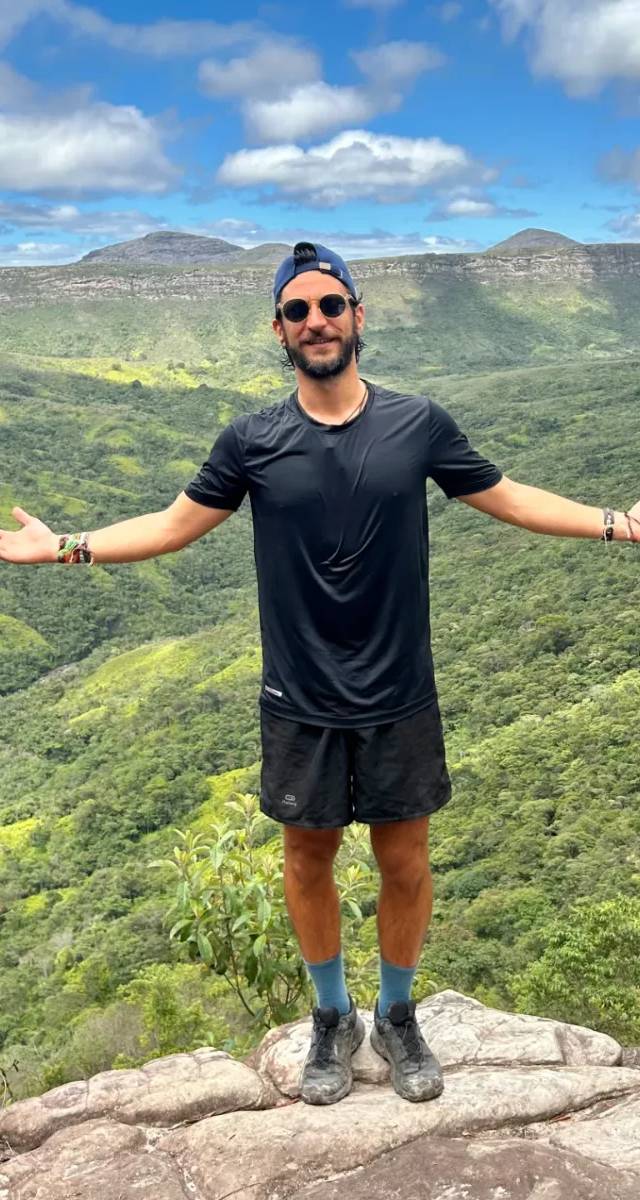
Alessandro Crea
After 11 years in consulting, I fulfilled a lifelong dream: nine months backpacking without a set plan. A journey around the globe, and deep inside myself. Starting in India, spending 26 days in an Ashram studying yoga, meditation, pranayama, and Hinduism, where discipline was absolute and the body became the terrain to work on every day. Then on to South America, living through experiences that aren't easily explained and that I hadn't even tried to explain to myself. From the Andes to Peru, through the Amazon all the way to the Bahian and Carioca coasts. That journey sparked the conviction that certain knots we carry inside only unravel when we are far away from the context that created them. That physical movement and geographic disorientation do something that a hundred conversations sitting down simply cannot do. From that journey, the LaChiave journey in Bahia was born.

Sara Bertola
For several years now, travel has been my primary tool for researching and exploring the world. I have traveled through and lived across all continents, developing a visual and documentary perspective on the world around me through photography. Over time, this gaze has intertwined with a deeper exploration of human nature and the diverse ways cultures construct meaning, relationships, and forms of belonging. At the core of this inquiry are cultural codes, rituals, forms of spirituality, and our relationship with nature—themes I explored through my training in Naturopathy and continue to delve into through my studies in Anthropology. In parallel, practicing and teaching Yoga led me to explore the body, presence, and the inner dimension through a discipline where the very idea of union and connection is fundamental. For about four years, I have been guiding and coordinating groups around the world. My role is to build connections and facilitate meaningful encounters: between those who arrive and those who live there, between languages and cultural codes, but also between what is experienced outwardly and what that experience stirs within us. In doing so, I bring the practices and tools I have gathered and developed over the years, supporting people in living the experience with greater presence and awareness. See you on the journey!
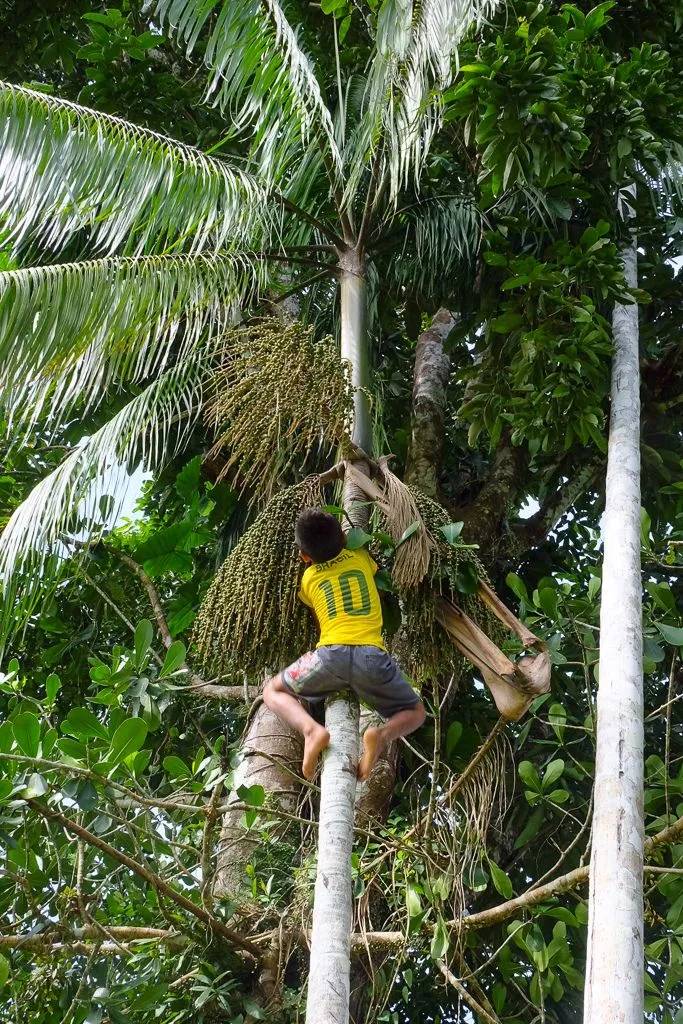
Between the Amazon rainforest and the ocean lies a night when the year turns. Fifteen days to arrive lighter than when you set out, and see what you return with.
The journey day by day
Landing and transfer to your accommodation. Accompanied by a local guide, the day is dedicated to taking in our surroundings. We start at the market: river fish, fruits never seen before, Amazonian herbs and spices—a first contact with the colors and flavors of the region. We then move on to the Museu da Cidade de Manaus to immerse ourselves in Amazonian culture, followed by the Teatro Amazonas, a symbol of the rubber boom and the city's rich history. In the evening, a stroll downtown and dinner at a local restaurant.
- Transfer from airport to hotel
- Local guide
- Admission to the Teatro Amazonas
- Transfers within the city
- Overnight stay in a double room at the hotel.
We leave the city behind and travel up the Rio Negro by speedboat, less than two hours navigating into the Reserva de Desenvolvimento Sustentável do Rio Negro. We arrive at Comunidade Saracá in the early afternoon, settle in, and meet our hosts, followed by a short orientation walk through the forest surrounding the village. Dinner is prepared by the community itself, featuring river fish and ingredients grown right there. As the sun goes down, we head out on our first night boat trip through the flooded forest to spot caimans and nocturnal wildlife, the darkness broken only by our flashlights.
- Speedboat transfer
- Local guide
- Overnight stay in the community
- Lunch and dinner
A day dedicated to a craft as ancient as the forest itself: at the community's casa de farinha, you learn the traditional process of preparing cassava, from harvesting and grating to the roasting that yields farinha do cabo, a staple food across the Amazon, present at every meal. It is also a time of connection: you work side by side with people who have done this every day for a lifetime, sharing stories and laughter. In the afternoon, a walk around the community lets you keep exploring the area, amidst vegetable gardens, canoes, and the slow pace of life along the river.
- Local guide
- Craft activity
- Overnight stay in the community
- Breakfast, lunch, and dinner
Last full day at Comunidade Saracá. In the morning, a guided hike of about three kilometers through the forest, followed by a walk deeper into the vegetation to identify plants, animal tracks, and learn to read the signs of the forest—including those used for generations to navigate and heal. In the afternoon, time to rest on a river beach, letting the experience settle before leaving the community: the warm water of the Rio Negro, thoughts slowing down. In the evening, before returning to connection and noise, a quiet moment together to write something down.
- Local guide
- Hike in the forest
- Overnight stay in the community
- Breakfast, lunch, and dinner
Leave Comunidade Saracá behind and head back to Manaus by speedboat, then board a flight to Recife. From there, a final transfer brings you to Olinda, arriving in the evening. In just a few hours, you move from the silence of the river to the lights of a city getting ready to ring in the new year: the journey shifts rhythm and scenery completely.
- Breakfast
- Speedboat transfer to Manaus
- Flight from Manaus to Recife
- Transfer from Recife to Olinda
- Overnight stay in Olinda in a double hotel room.
In the morning, we head to Recife: a stroll through the historic center, exploring Marco Zero, colonial architecture, and river bridges, followed by a visit to the museum dedicated to frevo and carnival—discovering why Olinda and Recife's carnival is considered Brazil's oldest, and why here it's not just a celebration, but an essential piece of collective identity. In the afternoon, return to Olinda: walk up to Alto da Sé, the viewpoint overlooking the bay and, in the distance, Recife's skyscrapers—a contrast that perfectly captures the two souls of this land. Wandering through the alleys, you will find artist studios and craft workshops, where the bonecos—the papier-mâché giants that parade during carnival—are already taking shape. In the evening, we welcome the new year in the city streets, surrounded by music and celebration.
- Breakfast
- Round-trip transfer between Olinda and Recife
- Museum admission
- Overnight stay in a double room hotel
No set plans. On the first day of the year, Olinda is a city at rest, with almost everything closed, and the best thing to do is wander aimlessly up the slopes, stop to look out at the ocean from above, and stay in silence a little longer than usual. Over the course of the day, we gather for a shared moment: what we are leaving behind in the year that ended and what we are carrying into the one just beginning. It is the symbolic center of the journey, falling right at the halfway mark.
- Breakfast
- Overnight stay in hotel double room.
We leave early from Olinda to reach Maracaípe, our home base for the coming days. In the afternoon, we head out on our first jangada ride along the Pontal de Maracaípe, drifting among mangroves and shallow waters where seahorses swim. It is one of the few sanctuaries in the world where they thrive in their natural habitat, anchoring their tails to the roots to blend in and hide from predators: the jangadeiro dives in to give us a closer look, before gently returning them straight to the water. The excursion winds down with sunset over the estuary, one of the most stunning in the area.
- Breakfast
- Transfer from Olinda to Maracaípe
- Jangada tour
- Overnight stay in Maracaípe in a double room hotel.
A day dedicated to Porto de Galinhas, just minutes from Maracaípe: the famous natural pools reached by colorful jangada, surrounded by tropical fish and the turquoise waters of the coral reef. The name dates back to the era of the slave trade, when clandestine ships announced their arrival claiming to carry chickens, and today is recalled only by a few rooster sculptures dotted throughout the town. Once a simple fishing village, the center still retains that relaxed atmosphere along its narrow streets, among local craft stalls and coqueirais overlooking the beach.
- Breakfast
- Transfer from Maracaípe to Porto de Galinhas
- Jangada tour to the natural pools
- Overnight stay in a double room hotel in Maracaípe
A free morning in Maracaípe, whether for one last surf session on its waves—among the most renowned in the region—or a buggy ride through the dunes and coconut groves. In the early afternoon, transfer to Japaratinga, the new base for the final leg of the journey, where the pace slows down even further.
- Breakfast
- Transfer from Maracaípe to Japaratinga
- Overnight stay in a double room hotel
A day in Maragogi, twenty minutes from Japaratinga, nicknamed the Brazilian Caribbean for its turquoise waters. At low tide, a boat takes you to the famous natural pools of Galés, about six kilometers off the coast: a natural aquarium formed by the coral reef, up to five meters deep, where you can swim among corals and colorful fish.
- Breakfast
- Transfer from Japaratinga to Maragogi
- Excursion to the Galés
- Overnight stay in a hotel, double room.
Our last full day, and we're heading out once again. An hour's drive north, crossing the border between Alagoas and Pernambuco to reach Tamandaré for the final excursion of the journey. Praia dos Carneiros is five kilometers of coconut palms and white sand, but what sets it apart from every other beach seen so far is its setting: right at the mouth of the Rio Formoso, where the river flows into the ocean. It's this meeting of waters that shapes everything here—the warm, emerald waters, the sandbars emerging at low tide, and the mangroves right behind the beach. We navigate the river's final stretch by boat, weaving through mangroves and tide-exposed sand spits, stopping for the traditional clay bath that has always been a ritual here. Walking across the sand, we reach the Chapel of São Benedito, built in the eighteenth century just steps from the water. In the afternoon, we head up to the Forte de Santo Inácio de Loyola—built in the late seventeenth century to defend this coast against Dutch invasions—and the viewpoint overlooking the entire coastline. There is a symmetry to this day worth naming out loud. Twelve days ago, the journey began by traveling upriver, along the Rio Negro, into the depths of the forest, where the water dictated our schedule, our meals, and our path. Today, we stand before another river moving in the opposite direction: reaching the end of its course and melting into the ocean. The journey closes in the very same element where it began, from the other side. We return to Japaratinga in the late afternoon. Before dinner, we take one last space together to write down what has emerged over these two weeks and share it with those who traveled alongside us. Then, we gather for our final dinner together.
- Breakfast
- Round-trip transfer from Japaratinga to Tamandaré
- Boat tour of the Rio Formoso estuary and Praia dos Carneiros
- Local guide
- Farewell dinner
- Overnight stay in a hotel in a double room
A final morning by the sea in Japaratinga, before leaving the coast and heading towards Recife for your flight back to Italy.
- Breakfast
- Transfer to Recife airport
What is included
- All overnight stays from December 26 to January 6, in a double room
- Full board at Comunidade Saracá
- Breakfast at all other stops
- Welcome dinner in Manaus and farewell dinner in Japaratinga
- Domestic flight from Manaus to Recife
- All internal transfers: airport transfers, speedboat from Manaus to Comunidade Saracá and back, city transportation in Manaus, transfer from Recife to Olinda, from Olinda to Maracaípe, from Maracaípe to Japaratinga, from Japaratinga to Recife airport
- Local guides in the Amazon
- Admission to Teatro Amazonas and the Carnival museum in Recife
- Excursions and activities at Comunidade Saracá
- Excursions to the natural pools of Porto de Galinhas and the Galés of Maragogi
- LaChiave hosting and facilitation by Sara Bertola throughout the trip
- Moments of writing, silence, and shared conversation during the transitions between each act
- Yoga and meditation practices
What is not included
- International flight from Italy to Manaus and return from Recife
- Health and travel insurance, mandatory to participate
- Meals not specified in the program, drinks, tips, and personal expenses
- Optional free-time activities, such as surfing or buggy rides in Maracaípe
- Vaccinations and any prophylaxis
How to get there and what to bring
Flights International flights are not included. Recommended routing: departure from your home airport toward Manaus (MAO), usually with one layover (often quickest via Lisbon). Departure is scheduled for the afternoon or evening of December 25th, arriving in Manaus in time for the start of the journey on December 26th. The return is on January 7th from Recife (REC). The internal domestic flight from Manaus to Recife on December 30th is included and arranged by us. Documents A valid passport is required. Ensure your passport meets local validity guidelines (typically at least six months from entry). Check your country's official consular travel advisory for current visa requirements before departure. Health and vaccinations For the Amazon region, yellow fever vaccination is strongly recommended and must be administered at least ten days prior to arrival. We advise consulting a travel medicine clinic well in advance for a personalized assessment based on your medical history. High-strength insect repellent, long protective clothing for evening outings, and high-SPF sunscreen are essential, not optional. Comprehensive travel and health insurance is mandatory. Accommodations In Manaus, Olinda, Maracaípe, and Japaratinga: carefully selected properties offering double rooms with private bathrooms and air conditioning. At Comunidade Saracá, we stay at Pousada Cantinho da Ioiô, run directly by the community: three rooms with a double bed and a single bed (each with AC, ceiling fan, and private bathroom), plus one room with four single beds (also with AC and private bathroom). It is simple, clean accommodation, not a hotel. The setting is the rainforest: expect insects, high humidity, and power and water that follow the community's natural rhythms. Rooms Accommodations are in shared double rooms with a fellow traveler from the group. This is the standard format for all LaChiave experiences, and there is no single supplement option. Sharing a room is an integral part of the experience, fostering meaningful camaraderie among participants. Connectivity At Comunidade Saracá, cell service and Wi-Fi are nonexistent or extremely intermittent for about four days. This is not a hardship to endure; it is one of the primary reasons we go there. If you need to check in with family or work, you can do so before leaving Manaus and immediately upon your return. Weather and packing Amazon: hot, humid, with potential for sudden rain. Pack lightweight, breathable clothing, comfortable closed walking shoes for trails, swimwear, water shoes, insect repellent, a headlamp for night outings, and long sleeves for the evening. Pernambuco and Alagoas: very hot and sunny. Light clothing, casual evening outfits, beachwear, snorkel gear if you have it, and high-protection sunscreen throughout. Valuable everywhere: a notebook. You will use it far more than you expect. Money The local currency is the Brazilian Real (BRL). Cards are widely accepted in cities and along the coast. At Comunidade Saracá, cash is necessary for purchasing local handicrafts or personal extras.
What people who have already joined a LaChiave trip say
Decidere di intraprendere un viaggio LaChiave è stata principalmente curiosità di qualcosa di diverso e più profondo dei soliti viaggi. Viverlo è stata pura magia. Con Alessandro abbiamo esplorato i luoghi più belli e meno conosciuti di Bali lavorando su noi stessi con spazi di riflessione, yoga e respirazione guidata. È stato un vero e proprio viaggio fuori e dentro di noi alla scoperta di un'isola unica nel suo genere. Alessandro è stato una guida attenta ai minimi dettagli per tutto il viaggio, dalle mete che ci ha portato a vedere ai momenti serali dedicati all'anima e alla riflessione più profonda su se stessi con spensieratezza e tanta allegria. Un'esperienza che sento di consigliare vivamente.
Carlotta
Bali 2026, la pace tra i templi
Il viaggio a Bali con Alessandro è stata un'esperienza davvero speciale, molto più di una semplice vacanza. In una settimana ci ha accompagnati alla scoperta di paesaggi meravigliosi, luoghi autentici e angoli dell'isola lontani dai percorsi più turistici. La sua presenza ha fatto la differenza: è stato sempre disponibile, attento e capace di organizzare ogni giornata con grande cura, lasciandoci allo stesso tempo lo spazio per vivere ogni momento con calma e consapevolezza. Grazie alle attività di yoga, respirazione e riflessione, il viaggio è diventato anche un'occasione per fermarsi, ascoltarsi e ritrovare un contatto più profondo con se stessi, senza mai perdere leggerezza e divertimento.
Michelangelo
Bali 2026, la pace tra i templi
What people who have already experienced a LaChiave space say
I walked in with a blank page and walked out with a notebook full of ideas, reflections and shared moments
I am leaving here feeling much richer and much less alone, so thank you all so much for this evening!
It was a beautiful surprise, a useful space and such a natural, nourishing flow, thank you to everyone who spoke up 🌱❤️ I really hope you will hold more of these!
Honestly I had no expectations, I chose to take part in a spirit of listening and openness. Thank you from the heart for all the reflections and the sharing that came up. I am very grateful for such a nourishing moment
Thank you all. A really beautiful space. I am off to get my meditation cushion ready